BatteryFlower
When designing dashboards for energy systems in previous work, I realised that numbers alone don't communicate well. I wanted to build a playful infographic to tie together both sustainability and readable battery insights.
- Year
- 2026
Stack
- CSS
- TailwindCSS
- React
- TypeScript
- UI/UX Design
- Figma
A new representation of battery health
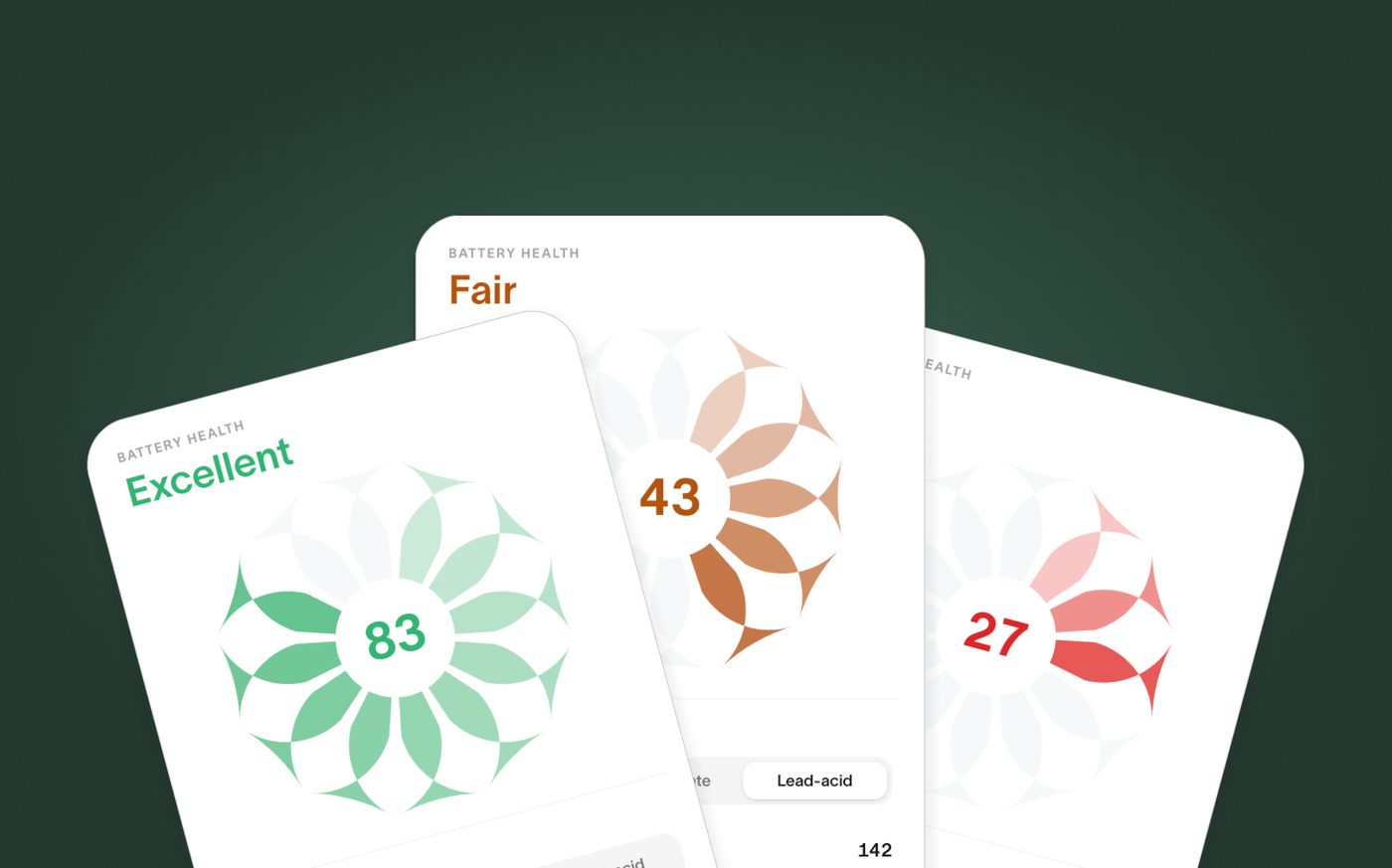
BatteryFlower translates complex battery performance data into a visual, interactive system that anyone can understand. Instead of raw numbers, battery health is expressed as a circular “flower” of segments, where each petal represents a portion of the overall score. Healthier batteries produce fuller, more vibrant petals, giving users an immediate sense of performance without needing to interpret technical figures.
Battery Health
Poor
Battery Type
Once daily
Optimal operating range
Try it out! This is an interactive case study ⟢
Balancing scientific accuracy with clarity
The health calculation is based on established battery science. Lithium-ion, solid-state, and lead-acid chemistries degrade differently depending on charge cycles and operating temperature. Research on battery lifetime and thermal stress (Schmidt et al., Journal of Power Sources, 2020) informed the model, ensuring that the dynamic health score from 0-100 reflects realistic behaviour. Higher temperatures accelerate wear, and frequent cycles reduce lifespan. These are factors the visualisation communicates clearly.
Immediate feedback and interaction
I wanted the controls to be understandable without much explanation. Users can change annual charge cycles using familiar options such as “Once daily” or “Weekly”, switch between battery types, and experiment with temperature. The flower updates as these values change, making it possible to see how each factor affects the battery rather than having to interpret the numbers alone.
Encouraging sustainable awareness
The flower makes battery degradation easier to see. Changing temperature, charge frequency or chemistry has a visible effect on its health, helping explain why the way a battery is used can affect how long it lasts.